
 Hassan Raza
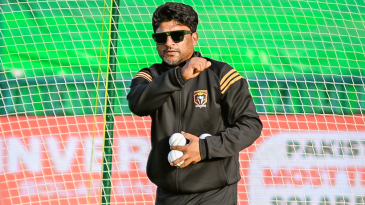
Hanif Malik, the current batting coach for Pakistan’s national cricket team, brings a wealth of experience from his days as a first-class cricketer and a decade-long coaching journey across domestic, age-group, and PSL teams. Appointed in May 2025, Malik has been instrumental in shaping both men’s and women’s cricketers in Pakistan. In this exclusive interview, he offers a candid assessment of the nation’s batting challenges, reflecting on his unique coaching philosophy and the systemic changes needed for consistent international success.
Redefining the Coaching Role: Beyond Technique and Fitness
While Malik is widely recognized for his work in performance and conditioning, his coaching approach extends far beyond traditional skill drills. He explains, “There’s a misconception that our players lack technical or physical ability. In reality, the gap is mental toughness and consistent, focused training.” Malik observed that young Pakistani talent tends to plateau at higher levels, often distracted and unprepared for the psychological demands of the game.
To address this, Malik pioneered a new coaching role-combining psychological conditioning, tactical awareness, and character development with technical training. “Talent may help a player get noticed, but it’s character and structured growth that sustain a career,” he asserts.
Building a Comprehensive Skill Matrix
Malik employs advanced technology and data analysis to evaluate players’ strengths and weaknesses. “We use sensors and analytics to pinpoint where players need improvement,” he says. “Our cricketers aren’t lacking compared to international peers-except in preparation.” He likens preparation to maintaining a car before a long journey: “Without proper alignment, even the best vehicle falters.”
Preparation: The Missing Ingredient
Unlike cricketing nations where off-seasons are dedicated to self-analysis and targeted improvement, Malik notes that Pakistan’s cricketers often rush from one tournament to the next without adequate recovery or preparation time. “Our players only get a chance to prepare properly when they’re already at the international stage-and under immense pressure to perform,” he notes. This, he believes, stunts their development and limits their ability to adapt.
Recalling his past work with players independently, Malik describes intensive annual training camps: “We’d dedicate 40 days to early starts, rigorous mental and physical conditioning, yoga, and daily data analysis. Social distractions were minimized so players could truly focus.” Drawing inspiration from the ‘Rocky’ film series, he emphasizes, “Preparation is everything-even the most talented must train for each challenge.”
The Crucial Role of Mental Maturity
Malik is adamant that technical prowess alone does not guarantee success. “A batter’s average success rate is only around 30%, regardless of skill,” he explains. “The real differentiator is decision-making under pressure-being mentally strong enough to block out external noise.”
He breaks down ‘skill’ as a blend of technique, physical ability, and composure in tense situations. “We often mistake a good cover drive for complete skill-but true skill is much broader.”
From Talent to Professional: The Importance of Development Pathways
Pakistan’s approach to player development, Malik argues, is too hurried. “Players often get fast-tracked to international cricket based on youth performances, without a proper journey through domestic and developmental levels. It’s like expecting a high school student to pass a graduate exam.”
He points to international examples-such as Sanju Samson’s decade-long journey to recognition-to highlight the need for patience. “We keep moving on to the next young talent instead of allowing players the time and support to mature. The pressure and expectations can lead to anxiety and mental health issues for young cricketers.”
Current Roles and Vision for Pakistani Cricket
Now also working with the Hyderabad Kingsmen, Malik is enthusiastic about their long-term ambitions. “The Kingsmen have a 20-year plan to nurture modern cricketers across Sindh, including a high-performance center in Hyderabad. I want to contribute to building these pathways and ensuring sustainable development.”
Though his current national team role is more focused on batting, Malik remains committed to holistic player growth and infrastructure improvement at the grassroots level.
Modernizing Coaching Practices
Reflecting on the state of coaching in Pakistan, Malik calls for continuous professional development. “Everyone-strength coaches, physiotherapists, skill coaches-must upgrade their methods,” he asserts.
He observes that domestic batting successes often fail to translate internationally because opposition analysis and tactical adaptability are lacking. “Our batters thrive locally because bowlers don’t target their weaknesses. We must teach players to study opposition, plan roles, and adapt to different match scenarios-moving beyond generic advice to strategic preparation.”
Conclusion: A Call for Patience and Process
Hanif Malik’s insights highlight a crucial truth: Pakistan’s cricketing talent is undeniable, but true success hinges on mental resilience, structured preparation, and the patience to nurture players through a proper developmental journey. For Pakistan to realize its full batting potential, systemic changes in coaching, preparation, and player management are essential.


Leave a Reply